Aviation Consulting, Representation and Technical Support Across the Aircraft Lifecycle
Aircraft & Engine Transitions · Technical Representation
You define the challenge. We deliver the solution.Technical Excellence and Independent SupportJetinnova Solutions is an aviation consulting firm specialized in supporting aircraft owners, lessors, and operators throughout complex technical and operational processes.We provide structured advisory, coordination, and independent representation services, helping our clients optimize resources, mitigate risks, ensure regulatory compliance, and protect asset value.
Services & Solutions
Jetinnova provides accurate and innovative solutions with high engineering, maintenance, and aviation‑management standards, through tailored and up‑to‑date management technologies, maintaining a rigorous focus on regulatory compliance and continuous improvement.Our mission is to support our clients in making informed decisions, optimizing resources, reducing operational risks and preserving asset value through professional judgement and continuous improvement. We stand for our clients’ interests, ensure regulatory compliance at every step, and deliver results they can rely on. By managing the entire process framework, we help each client reach their objectives with clarity and confidence.

End to End Aircraft & Engines Transition Support

Technical Representation

Advisory and coordination services for aircraft and engine transitions, supporting our clients throughout evaluation, negotiation, delivery, entry into service, monitoring and redelivery processes.
Consulting and representation services for aircraft operators during maintenance events or aeronautical projects, acting as a liaison between the client and third-party maintenance providers.
Location
Global Presence
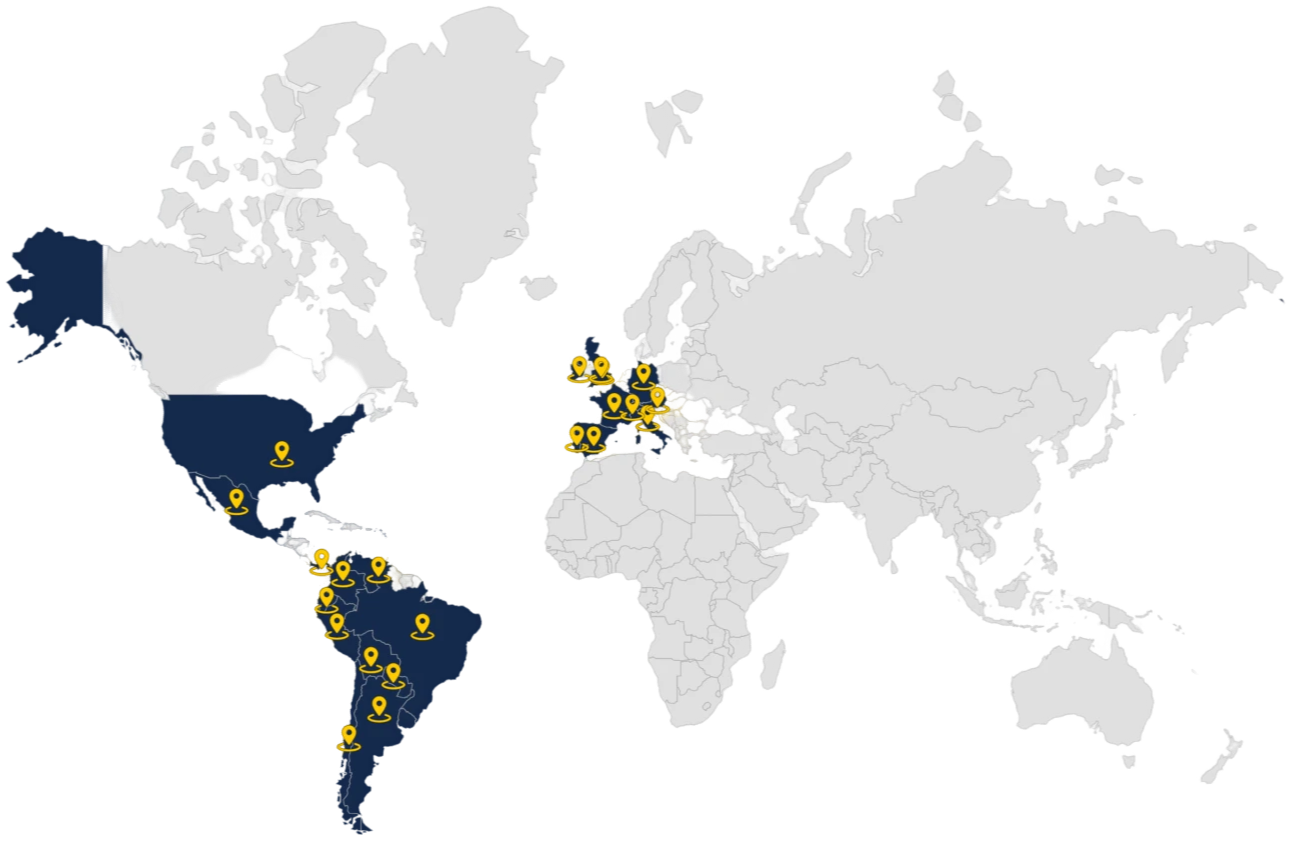
Jetinnova provides services and solutions across multiple strategic locations worldwide, supported by global preliminary consulting.Locations
Europe: Spain, Italy, Portugal, Germany, France, UK, Switzerland, Austria.America: USA, Mexico, Panama, Colombia, Venezuela, Peru, Ecuador, Bolivia, Paraguay, Uruguay, Chile, Argentina, Brazil.Asia: UAE, Hong Kong, Singapore.
Services are delivered on-site or remotely, depending on the project scope and requirements.Jetinnova will assess the project scope, required capabilities, and technical or operational requirements, and will formally notify the client regarding the feasibility and executability of the service.
Contact
Let’s talk about your priorities.Your project deserves the right partner. Contact us to discuss your needs, timelines, and priorities. We will review our availability and ensure full alignment to support your objectives effectively.Schedule a consultation and discuss with our team.
End to End Aircraft & Engines Transition Support
Advisory and coordination services for aircraft and engine transitions, supporting our clients throughout evaluation, negotiation, delivery, entry into service, monitoring and redelivery processes.

Aircraft Transition Support

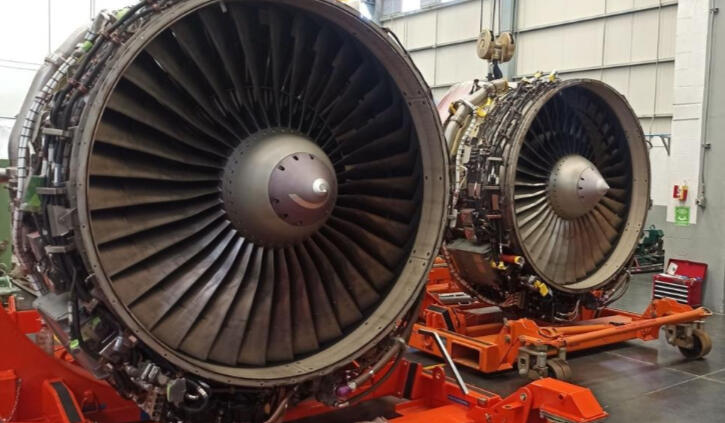
Engine Transition Support

Every contract is different, every client also, that’s why our services are adapted to each request.We deal with:
➛ Transition opportunity evaluation.
➛ Commercial Negotiation & contract structuring.
➛ Pre-purchase inspection.
➛ Technical records audit.
➛ Mid lease audit.
➛ Engine Shop visit managment.
➛ Return conditions compliance.
➛ Lease Redeliveries.
➛ Whole incorporation / Redelivery project management.
➛ New aircraft Assembly Line Inspection
Technical representation
Consulting and representation services for aircraft operators during maintenance events or aeronautical projects, acting as a liaison between the client and third-party maintenance providers.

Technical Representation

Every maintenance event is unique, and every client has different operational and contractual needs.Jetinnova provides independent technical representation and supervision to ensure transparency, compliance and full control during critical maintenance events.We deal with:
➛ Scheduled maintenance event supervision.
➛ Technical representation during third-party maintenance.
➛ Maintenance progress monitoring (GANTT / TAT).
➛ Non-routine management and impact assessment.
➛ Work Package change control.
➛ Budget monitoring and cost deviation tracking.
➛ Maintenance closure and records validation.
➛ Post-maintenance follow-up & Warranty claim support“Your Technical Presence Wherever the Maintenance Happens”
BLOG
Three Documentation Gaps That Define the Outcome of Your Aircraft Redelivery
This article examines three areas where documentation expectations consistently diverge between lessors and operators.
Technical Insights / Aircraft Transitions
Three Documentation Gaps That Define the Outcome of Your Aircraft Redelivery
May 2026 · 10 min read
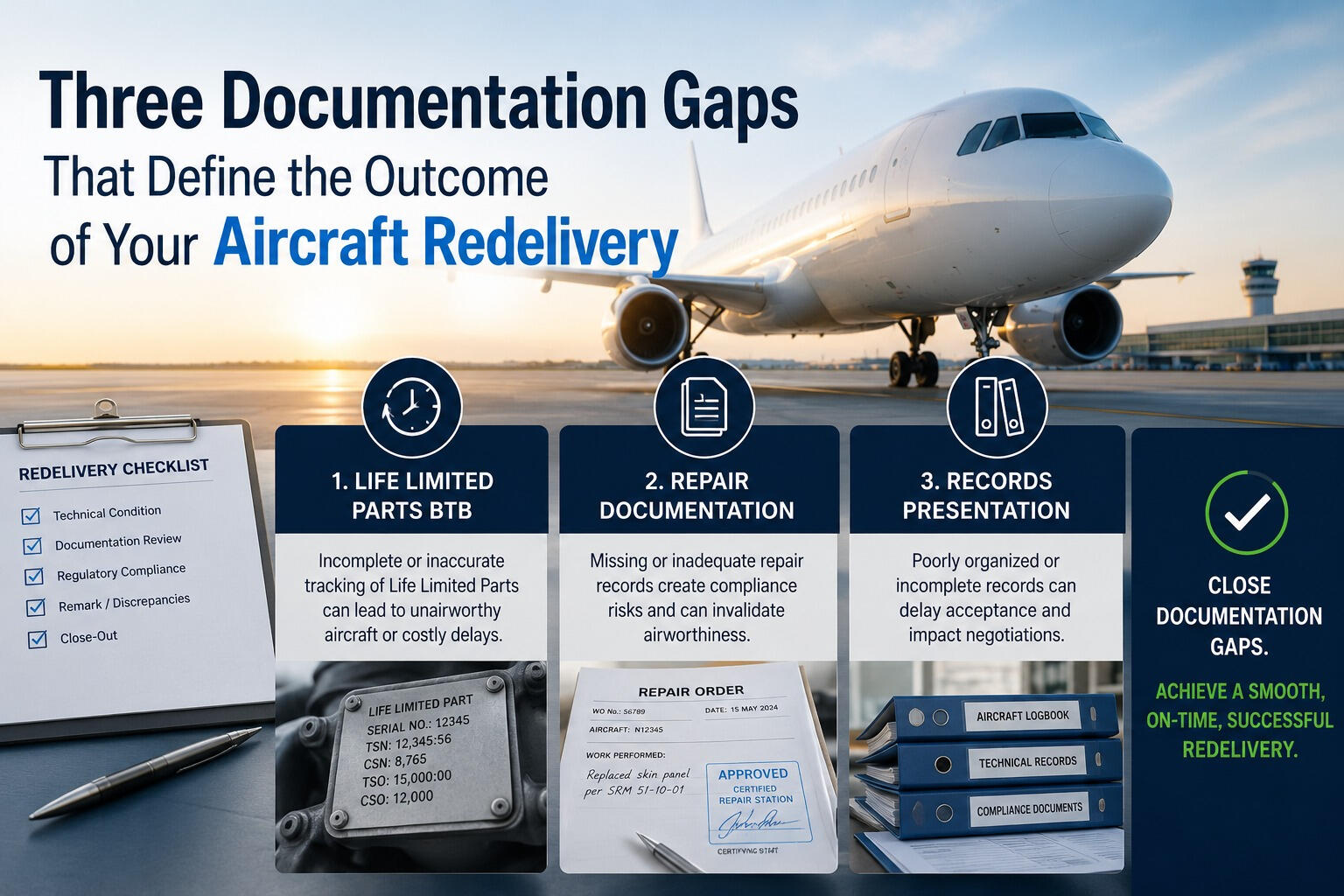
There is a common assumption in aircraft leasing: redelivery planning belongs to the final twelve months of the lease. In practice, experienced operators and lessors know better. The conditions that determine whether an aircraft returns smoothly (or becomes a protracted, costly dispute) are established much earlier. They are written, or more often left unwritten, in the lease agreement itself.This article examines three areas where documentation expectations consistently diverge between lessors and operators. The observations draw from the IATA Guidance Material and Best Practices for Aircraft Leases, version 4.1, and reflect patterns that technical teams encounter across lease types, fleet sizes, and operating environments.The underlying tension is well established. As framed in the reference work Aircraft Leasing and Financing, the lessor's priority across the asset lifecycle is value retention and liquidity, while the operator's focus is on mission capability and operational economics. Both perspectives are entirely rational. The challenge arises when the lease agreement does not translate that difference in priorities into documented obligations; because ambiguity at signing reliably becomes a dispute at return.The three areas where this gap most consistently emerges are life limited part documentation back to birth, structural repair documentation traceability, and records presentation.
──────────────────────────────────────────────
Life Limited Parts Back-to-Birth Standard
──────────────────────────────────────────────
Life limited parts carry defined cycle limits beyond which they must be removed from service. Regulatory requirements around their tracking are clear from an airworthiness standpoint, but they do not always satisfy what a lessor requires to maintain and demonstrate the full market value of an engine, landing gear, or APU. A documentation gap that might pass an airworthiness audit (a missing OEM birth document, an incomplete on-off log ) can meaningfully reduce an asset's residual value in a secondary market transaction.The IATA guidance identifies several parameters that should be established at lease inception, not negotiated under pressure at the return date.The first is the acceptance threshold at the start of the lease period. Agreeing on minimum remaining useful life for installed LLPs at delivery gives both parties a reference point throughout the tenancy. It allows the operator to plan cycles and financial reserves against a known baseline, and it gives the lessor a traceable commitment rather than an implied one.The second concerns part origins. Whether the operator is permitted to install PMA or DER components in place of OEM parts has a direct bearing on what documentation exists and what the lessor can present to a future buyer or lessee. Establishing limitations early (or agreeing on conditions under which alternatives are acceptable) eliminates one of the most common late-stage surprises.The third is the documentation structure for the LLPs themselves. A complete LLP history includes the OEM birth record showing the part's origin and, where applicable, the serial number of the engine or structure it was installed in during production; removal and installation logs tracing every engine, APU, or gear the part has been fitted to across its service life; maintenance records demonstrating compliance with applicable airworthiness directives, scheduled tasks, and any life data applicable at the time of each installation; and any incident clearance or ferry flight release documentation that affects the part's history. Each of these elements contributes to what the market understands as a traceable, bankable LLP record. Without that history, value is lost regardless of the remaining cycles on the part."The requirements of regulation are clear enough for operational safety, but not always enough for lessor expectations, where a soft lack of information can significantly decrease the asset market value."
— IATA Guidance Material and Best Practices for Aircraft Leases, v4.1
──────────────────────────────────────────────
Repair Documentation; A Living Record, Not a Closing Package
──────────────────────────────────────────────
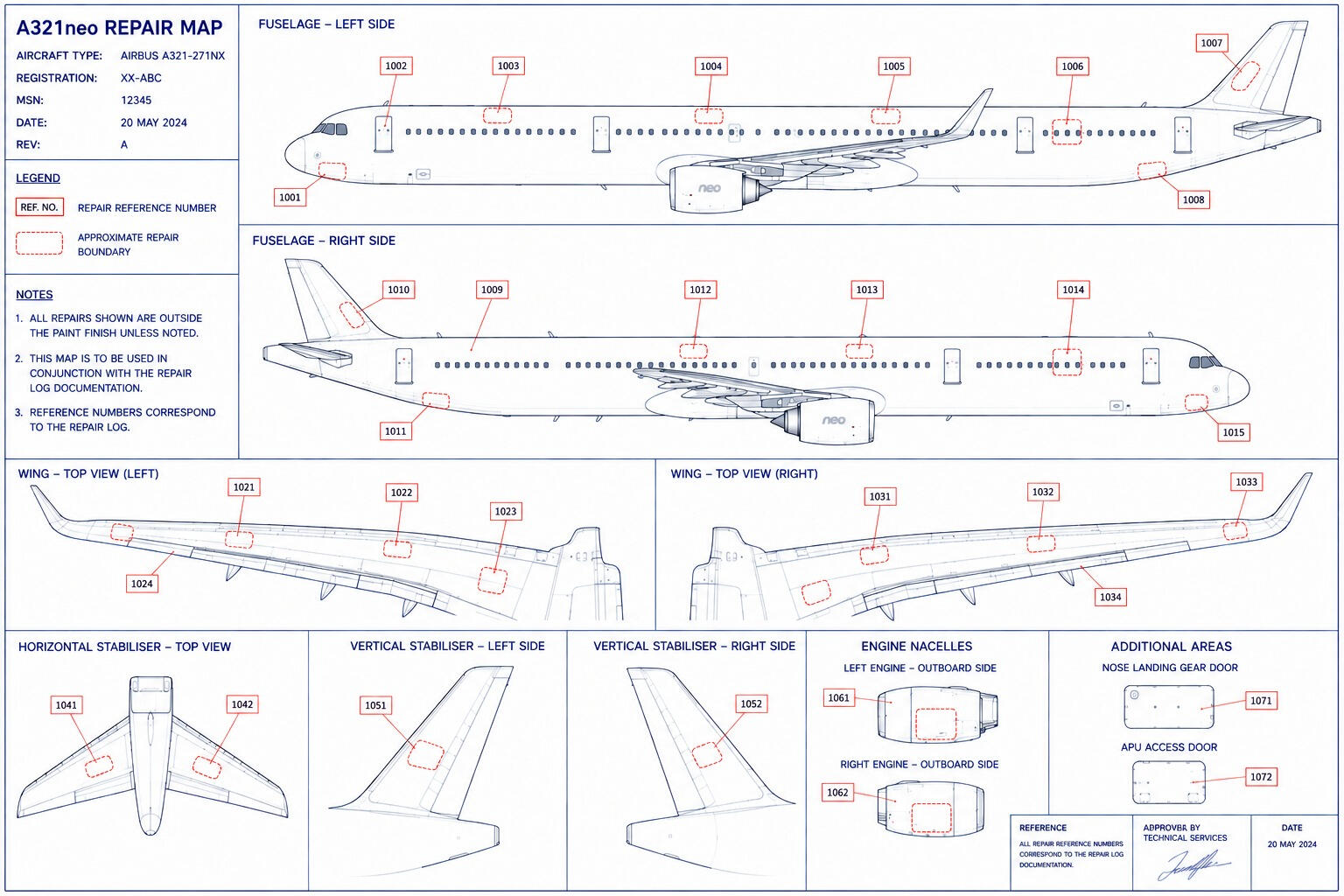
Structural repairs accumulate across the life of any aircraft. The documentation supporting those repairs (how the damage was found, how it was assessed, what repair scheme was applied, and what continuing airworthiness requirements it carries) is one of the most scrutinised packages at any redelivery or mid-lease audit.The challenge is rarely that operators fail to document repairs. It is that documentation is often assembled at the end of the lease, when time is short and the engineer who carried out the work years earlier may no longer be available. Repairs that were correctly performed and fully compliant at the time are reclassified as poorly documented, and what should be a clean return becomes a negotiation over evidence.The IATA guidance recommends treating the repair record as a living document being updated continuously by the engineering department and structured in layers that work together.The first layer is the aircraft repair map, a spatial record showing the precise location of each structural repair by reference number. This is not a list. It is a drawing, covering each side of the fuselage, the top view of each wing, the stabilisers, the engine nacelles, and any additional areas agreed upon in the lease. It allows any reviewer [during an audit, a sale process, or a redelivery] to locate a repair physically on the aircraft and cross-reference it with its documentation without ambiguity.